
Medical Review
Written by: Serene Clinic
Medically Reviewed by: Dr. Yasmin Amini, ND
Last Updated: August 2026
Services Related to This Article
Naturopathic Doula Care
Quick Read Summary
A naturopathic doula can provide continuous physical, emotional, and educational support while a family receives medical care in a hospital setting.
Hospital doula support may include labour positions, movement, breathing techniques, massage, counter-pressure, relaxation techniques, and emotional reassurance.
A doula does not replace an obstetrician, midwife, nurse, or other hospital healthcare professional and does not make medical decisions for the client.
Based on Dr. Yasmin Amini’s experience supporting hospital births, effective doula care changes throughout labour according to what the client needs at that particular moment.
Doulas can also help partners become more actively involved in the birth experience.
When birth plans change, a doula can help clients organize their questions and communicate their concerns and preferences with their healthcare providers.
The goal of doula care is not to achieve a particular type of birth. It is to help the birthing person feel supported throughout the experience.
How Naturopathic Doulas Help Families During a Hospital Birth
Giving birth in a hospital does not mean families have to choose between medical care and personalized, continuous birth support.
A naturopathic doula can work alongside the hospital care team, helping families feel supported, informed, and more comfortable throughout labour, birth, and the early postpartum period.
At Serene Naturopathic Doctors & Doulas, our role is not to replace your obstetrician, midwife, nurses, or other hospital professionals. Instead, we complement the medical care you receive by providing continuous emotional, physical, and educational support tailored to you and your birth preferences.
This distinction is particularly important in a hospital setting. Medical professionals are responsible for monitoring the health of the birthing person and baby, assessing clinical situations, and recommending or providing medical treatment when necessary. A doula provides a different type of care: consistent support centred around the experience of the person giving birth.
What Does a Naturopathic Doula Do in the Hospital?
Hospitals are designed to provide medical care and respond quickly when assessment or intervention is needed. However, physicians and nurses may be caring for several patients and may naturally move in and out of the room throughout labour.
A doula provides something different: continuous support focused on the birthing person and their family.
Depending on the situation and the client’s preferences, this may include helping with:
Labour positions and movement
Breathing and relaxation techniques
Comfort measures and massage
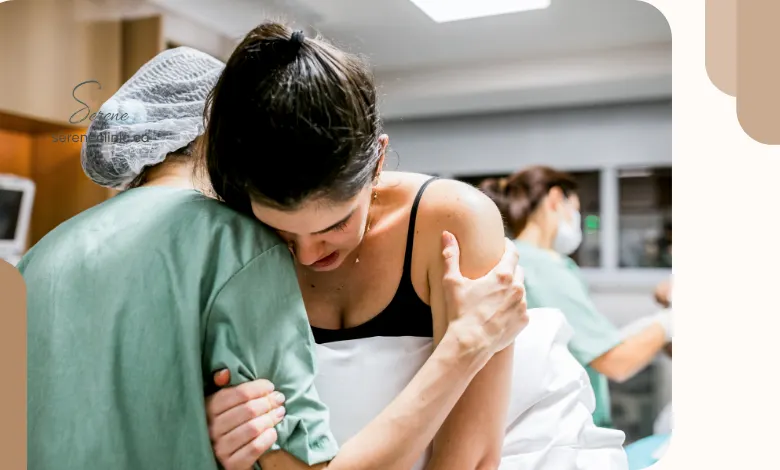
Counter-pressure during contractions
Creating a calmer environment
Emotional reassurance
Helping the partner become more involved
Discussing questions the client may want to ask their medical team
Supporting the client as circumstances or birth plans change
Early postpartum and breastfeeding support
What is helpful can also change throughout labour.
A position that provides comfort during one stage may no longer feel comfortable later. Someone who initially wants movement may later prefer quiet reassurance or massage.
For this reason, individualized support is an important part of the doula’s role.
What Does Naturopathic Doula Support Look Like in Real Life?
Every birth is different, so naturopathic doula support needs to be highly individualized.
Dr. Yasmin Amini, ND recalls supporting a client who was labouring in the hospital and became increasingly uncomfortable as her contractions intensified.
The client wanted to continue labouring without an epidural for as long as she felt comfortable doing so.
The goal was not simply to encourage her to “push through” the discomfort.
Instead, Dr. Amini worked with her moment by moment.
They changed positions, used breathing techniques, incorporated counter-pressure and massage, and made adjustments to help create a calmer environment in the hospital room.
As labour progressed, Dr. Amini continued to reassess what appeared to be helping and what was no longer working for the client.
This is an important part of continuous doula support during labour: support evolves with the person experiencing labour.
Supporting Choice Rather Than a Particular Type of Birth
The same experience also illustrates an important principle of doula care.
When the client began having questions about her options, Dr. Amini did not tell her whether she should or should not choose medication.
Instead, she helped the client organize the questions she wanted to ask so that she could discuss them directly with her hospital care team.
The important part of this experience was not whether the client ultimately chose an epidural or continued without one.
The goal was for her to feel supported in making the decision that was right for her at that point in her labour.
This distinction matters.
A doula should not define a “successful birth” according to whether someone had an epidural, avoided an intervention, or followed every part of their original birth plan.
The person giving birth remains at the centre of the experience.
Physical Comfort Measures During Hospital Labour
One of the most visible parts of birth doula support involves physical comfort.
Depending on the client’s preferences, circumstances, and any guidance from the hospital team, a doula may help explore different ways to remain comfortable during contractions.
Labour Positions and Movement
Remaining in one position throughout labour may not feel comfortable for everyone.
A doula can help a client explore different positions and movement strategies and determine which ones feel most supportive at different stages of labour.
The goal is not to prescribe one “correct” labour position. Instead, it is to respond to what the client is experiencing.
Counter-Pressure and Massage
Some clients find hands-on comfort techniques helpful during contractions.
Counter-pressure and massage can be adjusted according to the client’s feedback. What feels supportive during one contraction may need to change during another.
This ongoing feedback is one reason continuous support can be valuable.
Breathing and Relaxation
During intense contractions, simple breathing and relaxation techniques may help a client remain focused.
The doula can provide reminders and reassurance while adjusting techniques according to how labour progresses.
These approaches are comfort measures; they are not guarantees of a specific birth outcome.
Helping Partners Become Part of the Birth Team
Hiring a doula does not mean replacing the client’s partner.
In many cases, doula support can actually help the partner become more involved.
Partners often want to help during labour but may not know what to do when contractions become intense.
Dr. Yasmin Amini recalls another hospital birth in which the client’s partner was very supportive but wasn’t sure how to physically help during contractions.
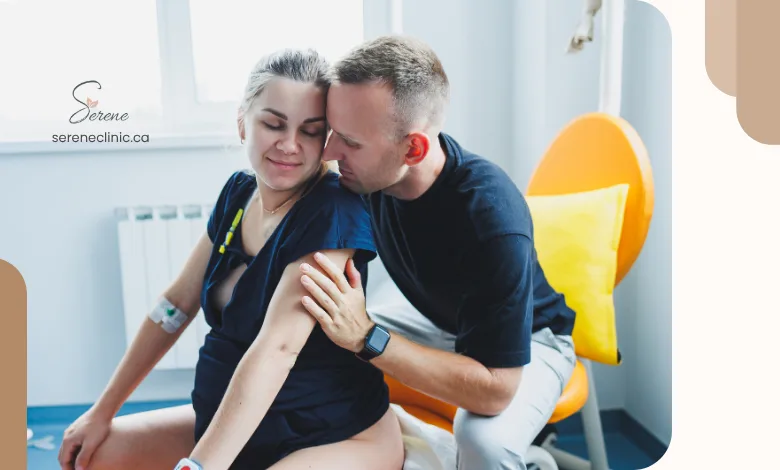
Dr. Amini showed him where and how to apply counter-pressure and helped guide him through supporting different labour positions.
Instead of standing back and feeling uncertain about what to do, the partner now had a specific role.
Dr. Amini could then step in when another comfort technique was appropriate or additional support was needed.
This is an important distinction.
The doula and partner do not need to compete for a role in the birth experience.
They can work together.
What Can a Birth Partner Do During Labour?
Depending on what the birthing person finds helpful, a partner may participate by:
Providing counter-pressure
Helping support certain labour positions
Offering reassurance
Helping with breathing techniques
Providing water or other permitted comfort items
Helping maintain a calm environment
Staying physically and emotionally present
A doula can provide practical guidance so that the partner feels more confident participating.
This can be particularly valuable for first-time parents who have never experienced labour before and may not know what to expect.
When the Birth Plan Changes
Birth plans can be useful for communicating preferences, but birth itself can be unpredictable.
A client may envision an unmedicated vaginal birth but later decide on an epidural.
Labour may need to be induced.
Continuous monitoring may become necessary.
An assisted delivery or Caesarean section may be recommended.
A change in the birth plan does not mean the client has failed.
In fact, this can be one of the most valuable times to have continuous emotional support.
A client may enter the hospital hoping for a vaginal birth with minimal intervention, but labour may progress differently than expected.
If the medical team recommends an intervention, the doula’s role is not to tell the client whether to accept or refuse it.
Instead, when clinically appropriate, the doula can help the client slow down the conversation, identify what they want clarified, and communicate their questions, concerns, and preferences to their healthcare providers.
Sometimes the most important support is simply helping someone feel grounded when their expectations suddenly change.
Helping Clients Communicate With Their Hospital Team
Labour can be physically and emotionally demanding.
When someone is experiencing strong contractions, fatigue, stress, or uncertainty, processing new information may become difficult.
A doula can help the client organize questions they may want to discuss with the medical team.
Depending on the situation, a client may want to ask questions such as:
Why is this being recommended?
What should I understand about this option?
Are there alternatives I can discuss with my provider?
What happens if we proceed?
Is there anything I should understand before making my decision?
The healthcare provider remains responsible for explaining the clinical situation and providing medical advice.
The doula’s role is to support the client through the conversation—not to replace it.
Naturopathic Doula vs. Hospital Medical Team
Understanding the difference between these roles can help families know what to expect.
| Naturopathic Doula | Hospital Medical Team |
|---|---|
| Continuous emotional support | Medical assessment and treatment |
| Comfort techniques | Clinical monitoring |
| Labour positions and movement support | Diagnosis and management of complications |
| Breathing and relaxation support | Medication and medical procedures |
| Partner guidance | Medical recommendations |
| Helps clients organize questions | Provides clinical answers and informed consent discussions |
| Supports changing birth preferences | Manages medical needs of mother and baby |
These roles are complementary rather than competitive.
A positive hospital birth experience can include both appropriate medical care and individualized doula support.
Can You Have a Doula During a Hospital Birth?
For many families, yes.
Choosing a hospital birth does not necessarily mean giving up personalized labour support.
A naturopathic doula in Toronto can work alongside the professionals responsible for the client’s medical care while remaining focused on physical comfort, emotional reassurance, communication support, and the family’s overall birth experience.
Families should also confirm the current support-person and visitor policies of the hospital where they plan to give birth, since policies can vary.
Is a Naturopathic Doula Different From a Traditional Doula?
Both traditional doulas and naturopathic doulas may provide continuous physical, emotional, and educational birth support.
A naturopathic doula who is also a licensed Naturopathic Doctor brings additional professional education in naturopathic medicine.
However, this additional training does not mean the naturopathic doula replaces the hospital medical team during birth.
Within a hospital environment, maintaining clear professional boundaries and working collaboratively with the client’s healthcare providers remains essential.
Choosing Doula Services in Toronto for a Hospital Birth
If you are researching doula services in Toronto, experience within hospital environments can be an important consideration.
Before choosing a doula, consider asking:
Have you supported clients during hospital births?
How do you work with obstetricians, midwives, and nurses?
When do you typically join a client during labour?
What comfort techniques do you use?
How do you involve my partner?
What happens if my birth plan changes?
What support do you provide immediately after delivery?
Do you provide prenatal or postpartum support as well?
There is no single doula who is right for every family.
The goal is to find someone whose approach, experience, communication style, and scope of support align with what you want from your birth experience.
Why Continuous Support Matters
One of the key differences between doula care and other forms of maternity care is continuity.
Hospital staff provide essential clinical care, but staffing and responsibilities may change throughout a long labour.
A doula’s focus is different.
The person helping you breathe through an early contraction may still be beside you hours later when labour becomes more intense.
That continuity allows the doula to become familiar with the client’s preferences, comfort techniques, communication style, and emotional responses.
It also allows support to evolve.
Sometimes a client needs movement.
Sometimes they need massage.
Sometimes the partner needs guidance.
And sometimes the most valuable thing a doula can provide is simply a familiar, reassuring presence.
Experience From Dr. Yasmin Amini, ND: What Hospital Births Have Taught Me
Supporting families during hospital births has reinforced an important lesson for me: there is no single definition of a successful birth experience.
A client’s preferences matter, but labour does not always follow the plan we imagined beforehand.
Someone may hope to avoid an epidural and later decide that an epidural is the right choice for them.
A partner may arrive feeling unsure about how to help and, with a little guidance, become an active and valuable source of physical support.
A medical recommendation may suddenly change what the client expected their birth to look like.
My role in those moments is not to decide what the client should do.
Sometimes I am providing massage or counter-pressure. Sometimes I am suggesting a different position. Sometimes I am helping the partner understand how they can help.
And sometimes my role is simply helping the client collect their thoughts and identify the questions they want to discuss with their healthcare team.
The techniques may change throughout labour, but the purpose remains the same:
to help the client feel supported throughout their own birth experience.
— Dr. Yasmin Amini, ND
Why Families Choose Serene Naturopathic Doctors & Doulas
At Serene Naturopathic Doctors & Doulas, our approach combines individualized doula support with a strong emphasis on collaborative maternity care.
Our naturopathic doulas understand that families may have preferences for their birth while also recognizing that circumstances can change.
We focus on:
Personalized prenatal preparation
Continuous labour support
Physical comfort measures
Partner involvement
Respectful collaboration with hospital healthcare teams
Supporting informed communication
Early postpartum support
Breastfeeding and lactation support when needed
Our goal is not to create one particular type of birth.
It is to help each family feel prepared, supported, and respected throughout their individual experience.
Conclusion
A hospital birth and personalized doula care do not have to be opposing choices.
Hospital professionals provide essential medical assessment, monitoring, and treatment, while a naturopathic doula can provide continuous physical, emotional, and educational support throughout labour.
That support may involve breathing techniques and labour positions one moment, guiding a partner through counter-pressure the next, and later helping a client organize questions when circumstances unexpectedly change.
For families considering a birth doula in Toronto, the most important question may not be whether the doula can help create a particular type of birth.
It may be whether that person can remain adaptable, collaborative, and supportive regardless of how the birth unfolds.
Frequently Asked Questions
1. What does a naturopathic doula do during a hospital birth?
A naturopathic doula can provide continuous physical, emotional, and educational support. Depending on the client’s needs, this may include labour positions, breathing techniques, massage, counter-pressure, relaxation, partner guidance, and communication support.
2. Can I have a doula if I’m giving birth in a hospital?
Many families use doulas during hospital births. Because hospital policies can vary, confirm the current support-person policies with the hospital where you plan to deliver.
3. Does a doula replace my obstetrician or midwife?
No. A doula complements rather than replaces medical care. Obstetricians, midwives, nurses, and other medical professionals remain responsible for medical assessment, diagnosis, monitoring, and treatment.
4. Can a doula tell me whether I should get an epidural?
A doula should not make that medical decision for you. They can support you emotionally and help you identify questions you want to discuss with your healthcare providers so you can make an informed decision.
5. Can a naturopathic doula help if my birth plan changes?
Yes. Emotional and communication support can become particularly valuable when circumstances change. A doula can help you remain grounded and organize questions or concerns you want to discuss with your medical team.
6. Does having a doula mean my partner will be less involved?
Not necessarily. A doula can help partners become more involved by showing them practical ways to provide comfort, such as counter-pressure or supporting different labour positions.
7. What comfort techniques can a doula use during labour?
Depending on the client’s preferences and circumstances, techniques may include movement, position changes, massage, counter-pressure, breathing, relaxation, and environmental comfort measures.
8. What’s the difference between a naturopathic doula and a traditional birth doula?
Both may provide physical and emotional birth support. A naturopathic doula who is also a licensed Naturopathic Doctor has additional professional education in naturopathic medicine, while still respecting the distinct role of the hospital medical team during birth.
9. When should I start looking for a birth doula in Toronto?
Many families begin researching doula support during pregnancy so they have time to discuss birth preferences, understand the doula’s approach, and determine whether the relationship feels like a good fit.
10. What should I ask when choosing doula services in Toronto?
Ask about hospital birth experience, prenatal preparation, availability during labour, comfort techniques, partner involvement, approach to changing birth plans, collaboration with medical providers, and postpartum support.
References
World Health Organization (WHO). WHO Recommendations: Intrapartum Care for a Positive Childbirth Experience.
Bohren MA, et al. Continuous Support for Women During Childbirth. Cochrane Database of Systematic Reviews.
Society of Obstetricians and Gynaecologists of Canada (SOGC). Clinical guidance related to labour and birth.
American College of Obstetricians and Gynecologists (ACOG). Guidance related to approaches to intervention during labour and birth.
Looking for Naturopathic Doula Support in Toronto?
If you’re preparing for a hospital birth and would like personalized support before, during, and after labour, Serene Naturopathic Doctors & Doulas offers individualized birth and maternity care.
Explore our Birth Doula Support or learn more about Naturopathic Medicine at Serene Clinic.
This article is for informational and educational purposes only and is not intended as a substitute for medical advice, diagnosis, or treatment. Always seek the advice of your physician or other qualified health care provider with any questions you may have regarding a medical condition.